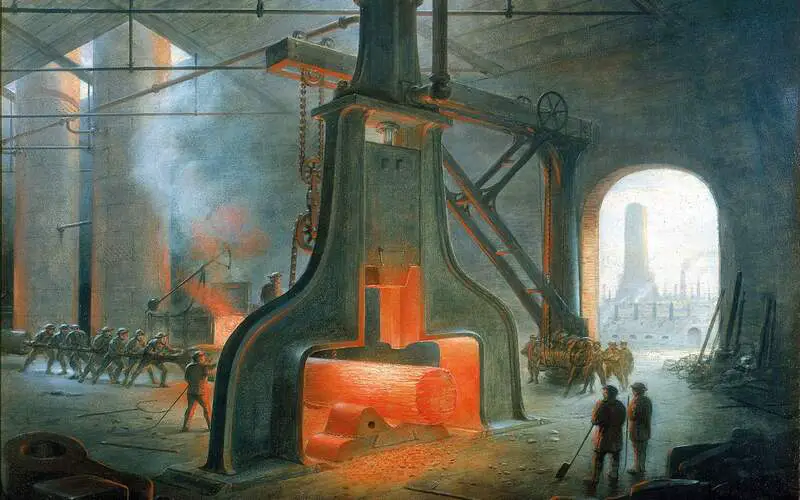
The Industrial Revolution introduced major inventions that permanently changed the world.
What Was the Industrial Revolution?
The Industrial Revolution was the shift from hand production to machine-based manufacturing in Europe and the United States. It is also called the First Industrial Revolution.
Before this period, most goods were made by hand. The introduction of new machines, factory systems, and skilled labor transformed industries such as textiles, iron production, and manufacturing. As a result, factories began producing goods in large quantities through mass production.
Powered mainly by steam engines and steam power, the Industrial Revolution started in England and later spread across the world, including the United States.
When Did the Industrial Revolution Start?
The Industrial Revolution began around 1760 and gradually slowed between 1820 and 1840.
What Caused the Industrial Revolution?
The main causes of the Industrial Revolution included the expansion of trade, rapid business growth, and advances in manufacturing technology.
Below is a list of important Industrial Revolution inventions:
10. Typewriter
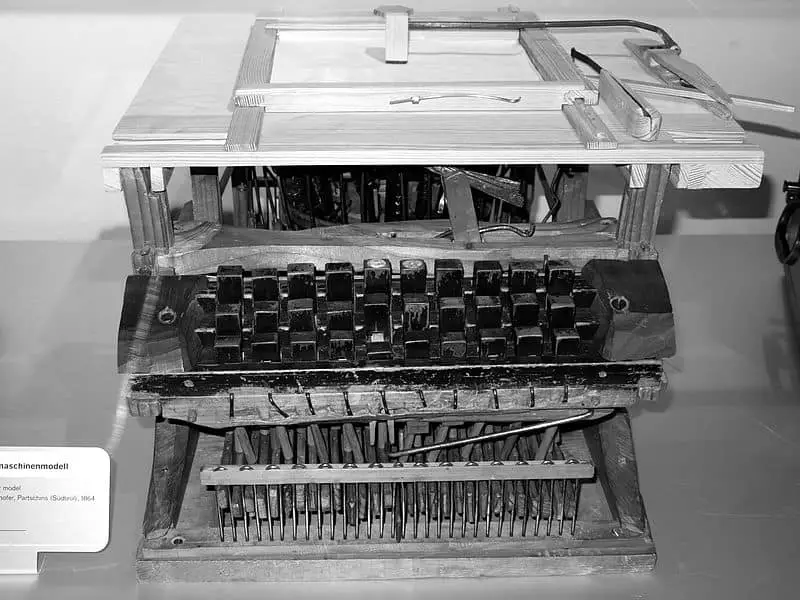
One of the most innovative inventions of the Industrial Revolution was the typewriter. It transformed communication, improved workplace productivity, and made writing faster, clearer, and more organized.
Before the invention of the typewriter, writing by hand was a slow and exhausting process.
Reading handwritten documents was often difficult because of inconsistent handwriting and poor readability.
The typewriter solved this problem by producing clean, uniform text that was easier to read and understand.
Compared to handwriting, the typewriter greatly improved the appearance and presentation of documents. Reports, letters, business records, and messages became more professional, structured, and easier to organize on paper.
The typewriter benefited merchants, scholars, authors, and office workers who previously spent long hours doing tiring manual writing, often called “pen drudgery.” It increased writing speed, reduced physical strain, and improved efficiency in offices and businesses.
Without the typewriter, producing large amounts of written work would have remained slow and labor-intensive.
The invention modernized the writing process and played a major role in the development of business communication and office work.
9. Electromagnet
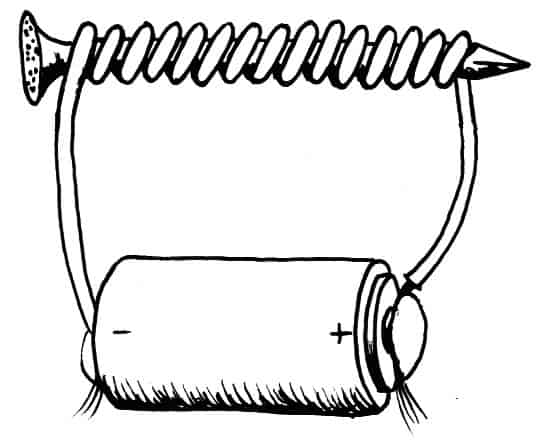
The electromagnet was invented in 1824 by British physicist William Sturgeon. His first electromagnet was made from a horseshoe-shaped piece of iron wrapped with 18 coils of exposed copper wire, since insulated wires had not yet been developed.
The iron was coated with paint to separate it from the wire coils.
An electromagnet is a type of magnet that produces a magnetic field when an electric current flows through it. Most electromagnets are made by winding wire into a coil or spiral shape around an iron core.
When electricity passes through the wire, it creates a magnetic field concentrated at the center of the coil.
The electromagnet became one of the most important inventions in the history of electricity and power generation.
It is a key component in generators, electric motors, transformers, and power plants. Without electromagnets, electricity production would have depended mainly on chemical methods such as galvanic cells or batteries, which were limited in scale and mostly used for scientific experiments.
The invention of the electromagnet helped make large-scale electricity generation possible and played a major role in the development of modern industry and electrical technology.
8. Portland Cement

The origins of cement can be traced back to ancient Greece, where early materials similar to modern cement were first used.
Modern Portland cement was discovered and patented in 1824 by Joseph Aspdin from Leeds. Portland cement later became one of the most widely used construction materials in the world.
Aspdin produced cement by heating powdered limestone mixed with clay in a furnace and then grinding the resulting clinker into a fine powder.
This process changed the chemical properties of the raw materials and created a much stronger artificial cement than ordinary crushed limestone could provide.
Concrete became a major advancement in modern construction because of its strength, durability, and versatility.
Many residential, commercial, and industrial buildings rely on concrete as a key structural material. When mixed with water, concrete hardens through a chemical reaction called hydration.
During this process, water reacts with the cement and binds the other materials together, eventually forming a hard, stone-like substance.
Without concrete, modern buildings and infrastructure would be far more limited. Most construction would still depend on expensive carved stone structures joined with natural limestone-based cement, similar to many ancient monuments.
7. Powerloom
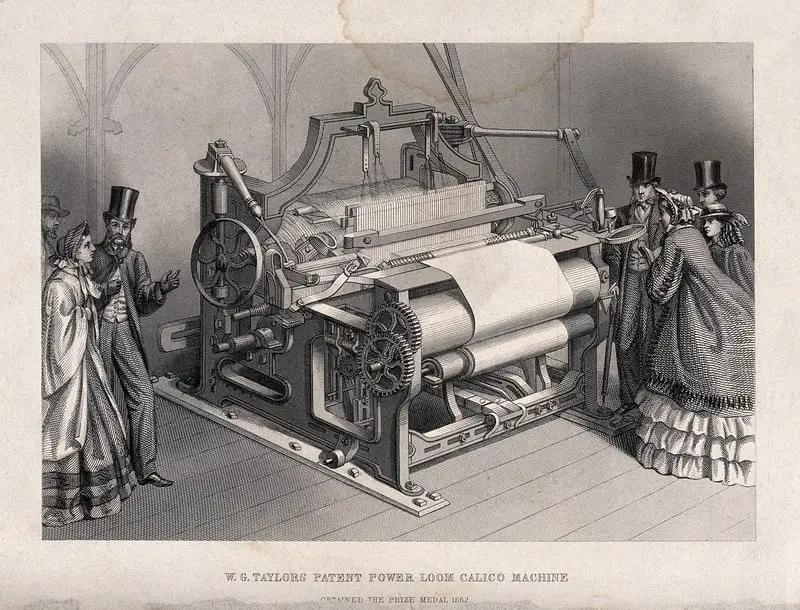
A power loom is a mechanized weaving machine invented during the early Industrial Revolution. It became one of the most important innovations in the industrialization of the textile industry and fabric manufacturing.
Edmund Cartwright designed the first power loom in 1784, and the first working model was built in 1785. The machine automated the weaving process and significantly increased cloth production.
Power looms operated in a similar way to traditional handlooms. In hand weaving, foot pedals were used to raise and lower the warp threads, while the weft threads were passed between them to create fabric.
The power loom kept this basic weaving method but replaced manual labor with steam power, reducing the physical effort and skill needed to produce cloth.
Before the Industrial Revolution, weaving cloth for clothing was done entirely by hand, usually by skilled craftsmen working part-time or in small workshops.
The process was slow, labor-intensive, and often inconsistent in quality. Even experienced weavers required a long time to produce fabric.
The invention of the power loom transformed textile production by making weaving faster, cheaper, and more efficient.
It helped factories produce large quantities of cloth and played a major role in the growth of the textile industry during the Industrial Revolution.
6. The Bessemer process
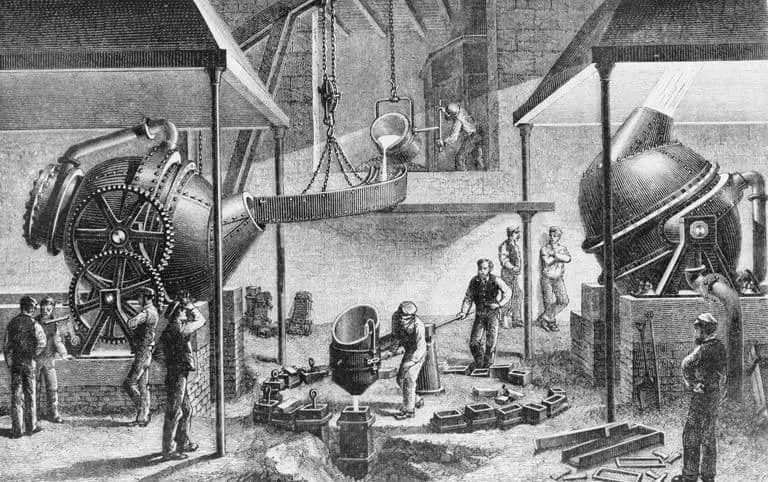
Before the invention of the open-hearth furnace, the Bessemer process was the first low-cost industrial method for the mass production of steel from molten pig iron.
The main principle of the Bessemer process was removing impurities from iron through oxidation. Air was blown through molten iron, causing unwanted elements such as carbon and silicon to burn away.
This process produced stronger and more durable steel at a much lower cost than earlier methods.
The Bessemer process became one of the most important innovations of the Industrial Revolution. It helped create stronger railway tracks, improved heavy machinery, and supported the construction of large engineering projects such as bridges and skyscrapers.
During this period, the United States rapidly advanced from the Iron Age into the Steel Age.
For most of human history, steel was produced only in small quantities because manufacturing it was expensive and time-consuming.
However, the invention of the Bessemer process in the 19th century, followed by later improvements in steelmaking and industrial process control, made large-scale steel production possible.
Mass steel production became a foundation of the modern global economy and a major indicator of industrial and technological progress.
5. Locomotive
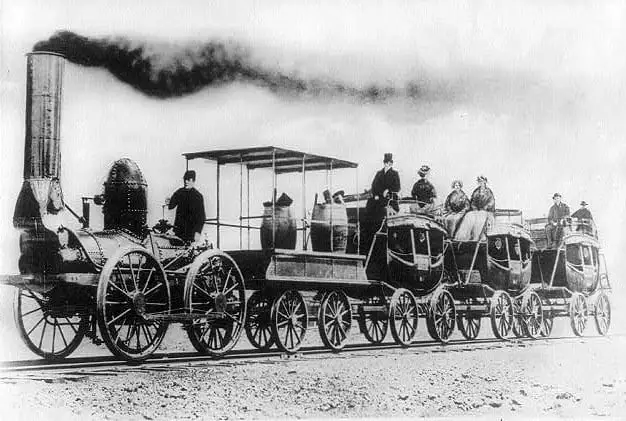
Steam locomotives and steamships transformed transportation during the Industrial Revolution by moving raw materials and manufactured goods faster and more efficiently than ever before.
Before railways, goods were mainly transported by horses and wagons, which were slow, expensive, and unreliable.
Steam locomotives allowed goods to travel much faster over long distances, making trade and industrial distribution more efficient.
Railroads also introduced fixed schedules, allowing businesses to know exactly when supplies and products would arrive.
Rail transport provided a smoother and safer way to move freight compared to horse-drawn transportation. Trains were more difficult to rob, could carry much larger quantities of goods, and reduced delays in delivery.
As railway networks expanded, products could reach cities, towns, and remote areas faster and more consistently.
The growth of railroads significantly lowered freight transportation costs, which increased profits for many businesses and helped expand industrial economies.
Faster transportation also allowed factories and merchants to supply goods to distant markets more easily.
Railways also improved everyday life for ordinary people. Communities in remote areas no longer depended entirely on local harvests for survival.
If crops failed, food and supplies could be transported quickly by train from other regions, reducing the risk of famine and shortages.
In addition, manufactured goods became widely available outside major cities. People no longer needed to travel long distances to metropolitan areas to buy essential products.
Trains could transport massive amounts of merchandise to local depots and stores, making goods more accessible and affordable for the general population.
The evolution of rail transport eventually led to the fastest train in the world, showcasing over a century of engineering progress.
Modern transportation owes a great debt to these early steam locomotives, just as today’s automotive industry is shaped by the top automobile companies that drive innovation.
4. Telegraph
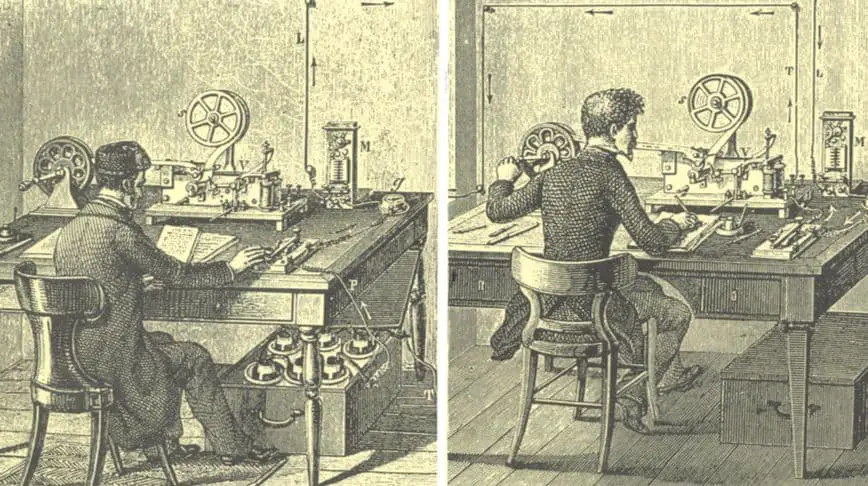
The Electric telegraph revolutionized communication by allowing messages to be sent over long distances through an electrical network system. It became one of the most important communication inventions of the Industrial Revolution.
Telegraph messages were transmitted using electrical signals and decoded through Morse code. The receiving machine produced markings that operators translated into readable text.
In 1844, Samuel Morse sent the first telegraph message: “What hath God wrought?” This historic moment demonstrated that people could communicate almost instantly across great distances without being physically present in the same location.
The invention of the telegraph transformed global communication, business, government operations, and journalism.
News organizations and governments could now share information much faster than ever before. The telegraph also led to the creation of Associated Press, the first major wire news service.
The telegraph further connected the United States with Europe, making international communication faster and more reliable. At the time, this was considered a revolutionary technological achievement.
Before the electric telegraph, long-distance communication relied on slower methods such as heliographs, drums, hydraulic telegraphs, postal services, traveling messengers, and trained carrier pigeons for private messages.
These systems were limited in speed, reliability, and communication range compared to the telegraph.
3. Watt Steam Engine
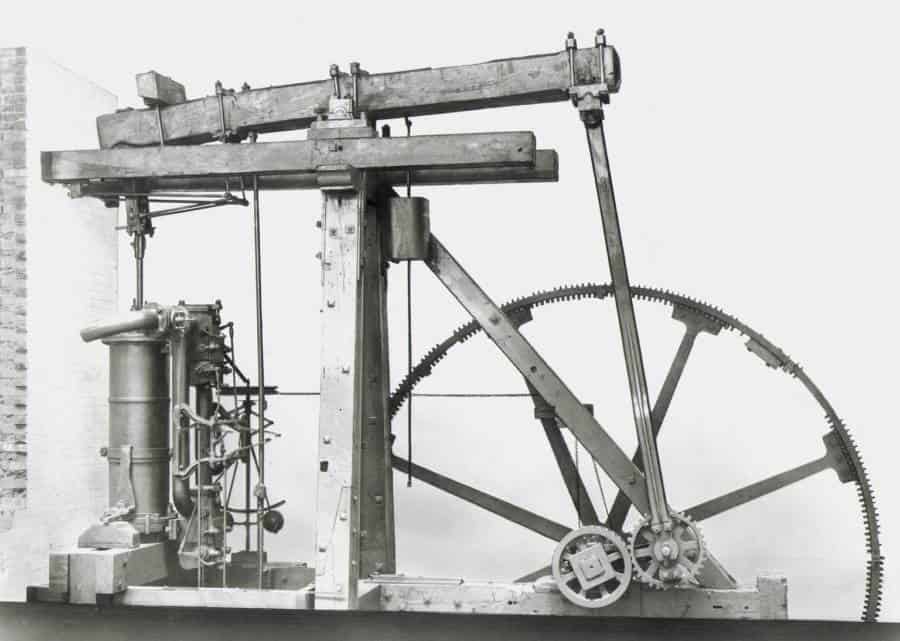
During the Industrial Revolution, steam-powered technology was considered cutting-edge, much like high-performance engines and jet aircraft are viewed today.
Steam engines fascinated people of the time and became one of the most world-changing inventions in industrial history.
In the 1760s, James Watt designed a more efficient steam engine by introducing a separate condenser. This innovation greatly improved engine performance and transformed the mining industry forever.
Early steam engines were mainly used to pump water out of flooded mining pits. This allowed miners to reach deeper underground resources more effectively and increased access to coal and minerals.
As steam engines became more successful, engineers and inventors continued improving the technology and expanding its industrial uses.
The steam engine later powered factories, trains, ships, and industrial machinery, becoming a major driving force behind industrialization and economic growth.
Before the development of steam power, transportation depended largely on horse-drawn carriages, while mining relied on slow, dangerous, and labor-intensive manual work. Many mining conditions were harsh and often inhumane.
Steam-powered machinery helped reduce some of these limitations and increased industrial productivity on a massive scale.
2. Flying Shuttle
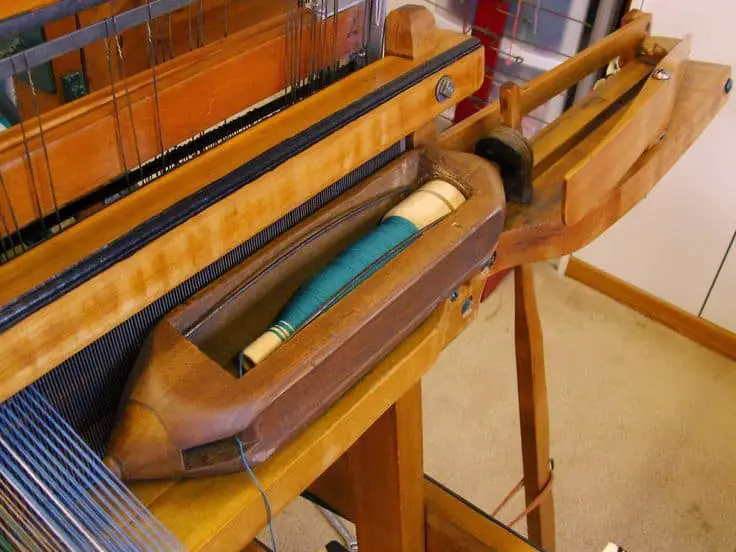
The Flying shuttle was one of the most important early inventions of the Industrial Revolution. It was invented in 1733 by John Kay and became a major step toward automated weaving and textile manufacturing.
Before the flying shuttle was invented, weaving was done manually on traditional looms. The shuttle carrying the thread had to be passed by hand through the warp threads.
For wide fabrics, two weavers were required to sit on opposite sides of the loom and pass the shuttle back and forth between them.
The flying shuttle mechanized this process by allowing the shuttle to move quickly across the loom with a simple pulling mechanism.
As a result, a single weaver could now perform the work that previously required two people. This greatly increased weaving speed, efficiency, and fabric production capacity.
Before this invention, most weaving was carried out in small home workshops as part of the cottage industry system.
After the flying shuttle was introduced, large textile factories with mechanized looms began replacing many small-scale hand weavers.
The increased speed of weaving also created a much higher demand for spun cotton thread. This demand later contributed to the invention of spinning machines and accelerated the growth of the cotton textile industry.
Cotton cloth became one of the first true industrial products because it could now be produced cheaply and in large quantities by machines in factories rather than entirely by human craftsmen.
1. Concept of Factory
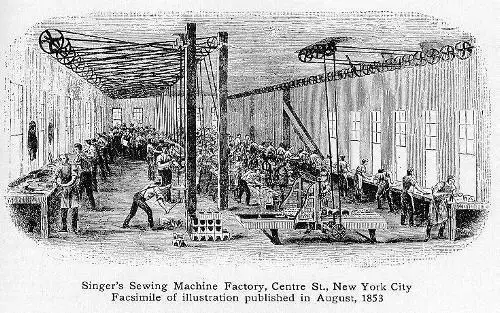
A factory, also called a manufacturing plant, is an industrial facility where workers and machines produce goods by converting raw materials into finished products.
Factories usually consist of large buildings equipped with industrial machinery and production systems.
During the Industrial Revolution, factories transformed manufacturing and became the center of mass production.
Before the introduction of industrial machines and modern manufacturing techniques in textiles, iron production, and other industries, most goods were made by individual craftsmen or small family workshops.
Products that were once carefully handmade started being produced in large quantities by machines inside factories.
This greatly increased production speed, lowered costs, and made goods more widely available to the public.
Before factories became common, manufacturing output was very limited, slow, and dependent on skilled manual labor.
Production methods also lacked variety and efficiency. For example, most textiles were traditionally made from wool and produced on a small scale.
The Industrial Revolution introduced many inventions and technological advancements that permanently changed the world.
It was a period marked by the rise of machinery, rapid industrialization, urban growth, and major developments in transportation, manufacturing, and communication.
The nations that embraced these advancements became the most technologically advanced countries of their time, setting the stage for modern global competition.
See the most useless inventions for a humorous contrast.
The industrial revolution acted as a catalyst to improve our lifestyle.
But it also introduced child labor, pollution, exploitation of working-class, exploitation of middle class, urbanization of London.
The mining of natural resources like coal for the steam engine proved the destruction of nature.
Britain, at that time, imported cotton from colonies for mass production of textiles using power looms.
Hahaha yeah, it was only after the industrial revolution people used boys for sweeping chimneys. Until economics came along, kids were in education until 18 and never made to work the fields or work as dogsbodies on ships.
It was because industrialization that demanded considerable work and investment from individuals and not necessarily the government, that Capitalism caused the industrial revolution.
There was a mistake. Without the emergence of capitalism, this investment of people whose actions are guided by profit motive would not have been possible.
nooooooooo