The Hindu temples are remarkable examples of spiritual architecture, cultural heritage, and religious devotion.
Many of these sacred sites are also the richest temple in the world, holding vast treasures donated by devotees over centuries.
From vast temple complexes in India to grand structures across Southeast Asia, this list of the top 10 largest Hindu temples in the world highlights massive temple grounds, intricate carvings, towering gopurams, and historical significance.
10. Meenakshi Amman Temple, Madurai (India)
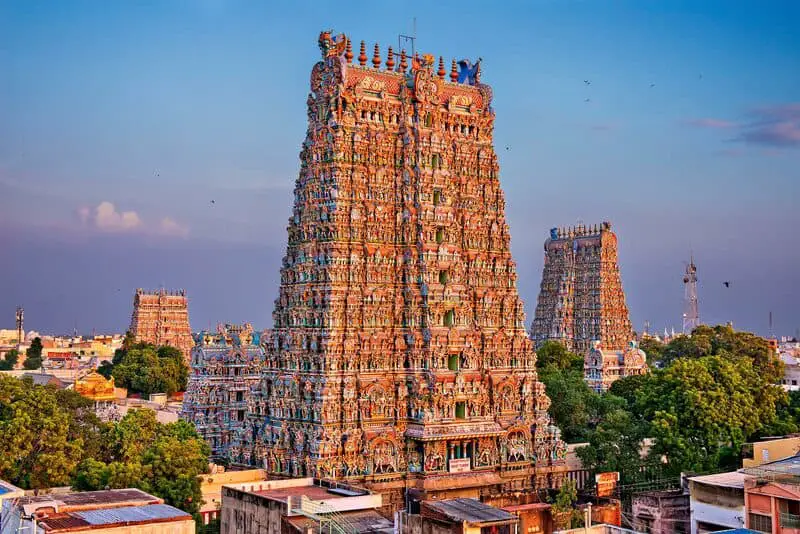
The Meenakshi–Sundareswarar Temple complex in Madurai spans about 17.3 acres (6–7 hectares) and is one of the largest and most famous Hindu temple sites in South India.
Its 14 towering gopurams, the Hall of Thousand Columns, and the sacred “Golden Lotus Tank” create a vast urban‑scale precinct that blends religion, commerce, and culture.
These gopurams rank among the tallest buildings in India when considering traditional temple architecture.
With an uninterrupted history of over a thousand years and continuous expansion up to the Nayak period, Meenakshi Temple remains both a colossal temple and a living city‑center of worship.
9. Jambukeswarar Temple, Thiruvanaikaval (India)
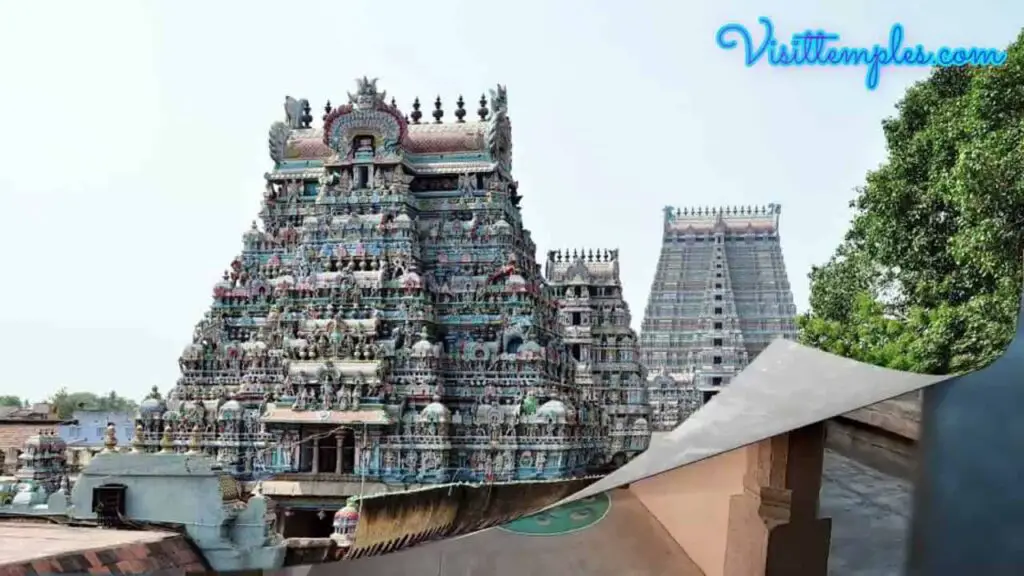
Another major Shiva‑dedicated temple in Tamil Nadu, Jambukeswarar covers about 18 acres (7 hectares) and is famed for its rare “water‑element” lingam.
The temple’s complex layout, with multiple prakarams, pillared halls, and a large tank, gives it one of the largest footprints among the Pancha Bhoota‑class temples.
Over centuries, its association with water‑immersion rituals and major festivals has kept it among the most visited and spatially large Hindu shrines in the region.
8. Ekambareswarar Temple, Kanchipuram (India)
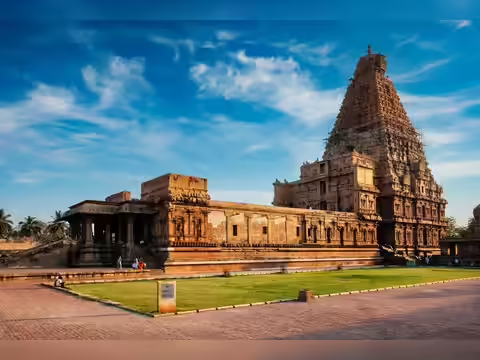
Part of the famous Pancha Bhoota Sthalams, the Ekambareswarar Temple in Kanchipuram spans about 23 acres (9 hectares) and is one of the largest Shiva‑dedicated complexes in Tamil Nadu.
Its famous thousand‑pillar hall, towering gopurams, and sacred mango‑tree shrine contribute to its vast footprint and religious significance.
The temple’s long history under Pallava, Chola, Vijayanagara, and Nayak rule has led to continuous expansion and elaborate enclosures.
7. Annamalaiyar Temple, Tiruvannamalai (India)
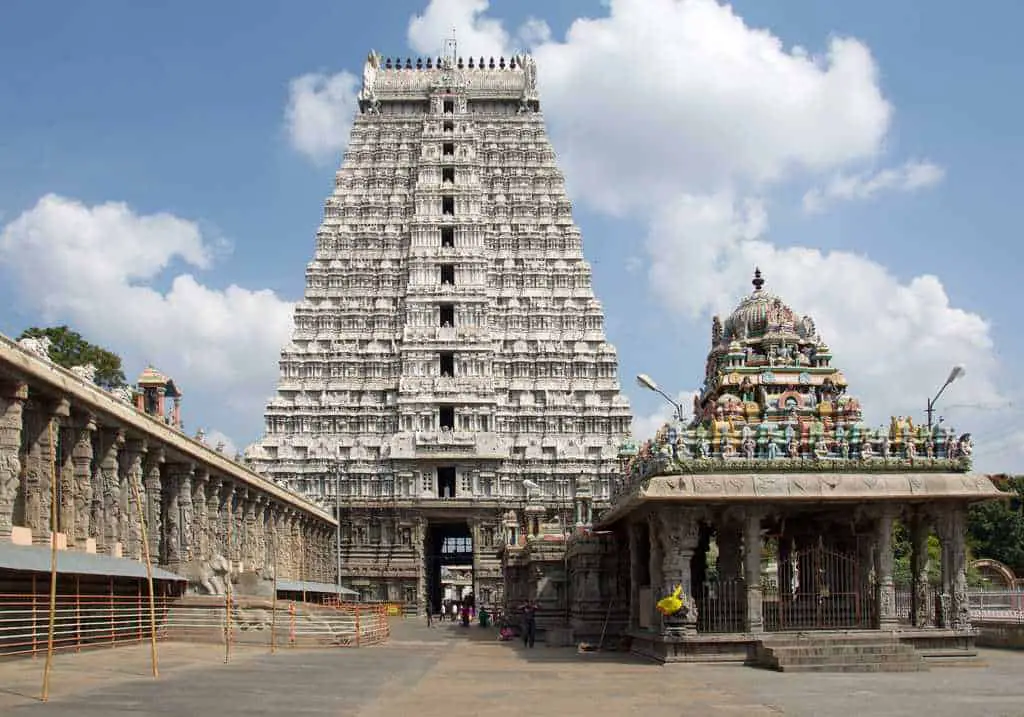
Set at the base of the sacred Annamalai hill, this Shiva temple in Tamil Nadu covers about 25 acres (10–11 hectares) and is known for its four towering gopurams and large temple tank.
The temple’s layout, centered on a fiery lingam theme, has made it one of the largest Shiva complexes in South India, with extensive halls, corridors, and shrines to subsidiary deities.
Its role in the Arunachala‑Samyakdeva tradition attracts tens of thousands during the annual Karthigai Deepam festival.
6. Nataraja (Thillai Nataraja) Temple, Chidambaram (India)
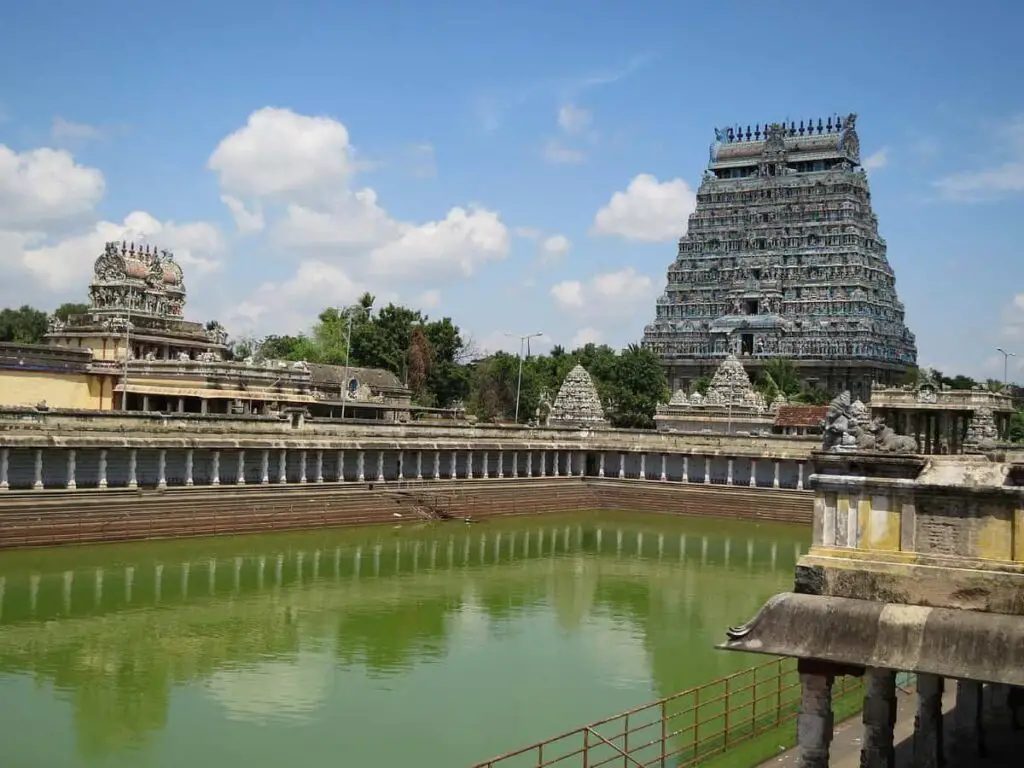
The Nataraja Temple in Chidambaram, dedicated to Shiva as Nataraja, occupies about 40 acres (16 hectares) and is one of the largest Shaiva shrines in India.
Its complex includes a massive golden‑roofed sanctum, the famous Chitsabha hall, and expansive outer precincts that once hosted grand rituals and royal courts during the Chola era.
The temple’s artistic and theological importance in the Shaiva‑Agama tradition has ensured its size and prominence across centuries.
5. Belur Math (Ramakrishna Temple, West Bengal, India)
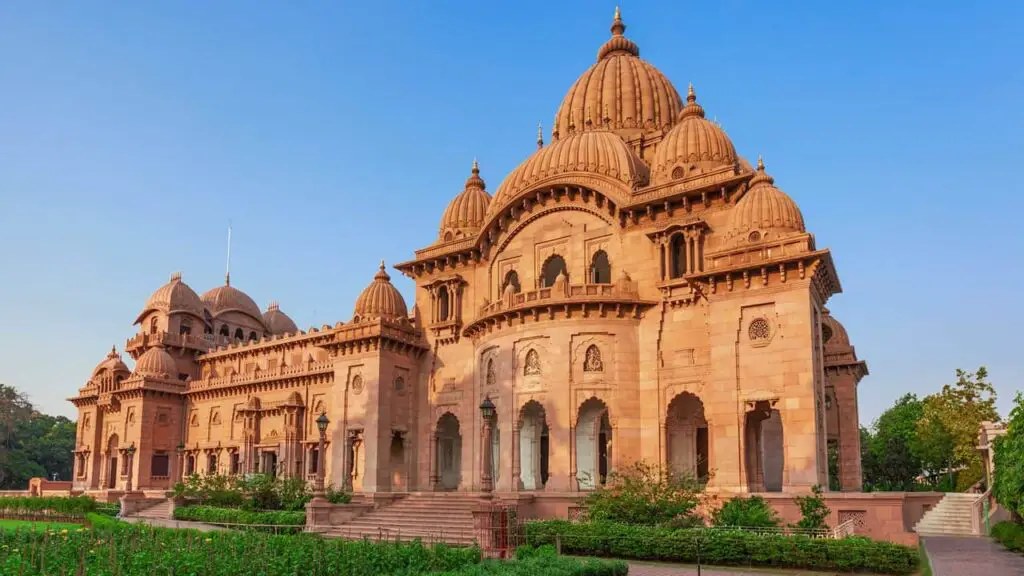
Belur Math, the headquarters of the Ramakrishna Mission, is a massive Hindu temple‑cum‑monastic complex on the banks of the Hooghly River, covering about 40 acres (roughly 16–17 hectares).
Designed to synthesize architectural styles from all major Indian religions, its main temple blends South Indian gopurams, Mughal domes, and Buddhist‑style towers, making it one of the most symbolically significant and spacious Hindu‑affiliated sites.
It functions both as a place of worship and as a global spiritual center, drawing devotees from across the world.
4. BAPS Swaminarayan Akshardham, Delhi (India)
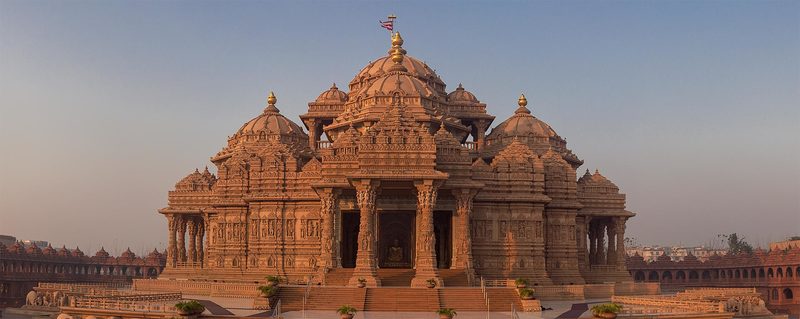
The Delhi Akshardham temple‑complex occupies about 100 acres and is often cited among the largest Hindu temple compounds in India.
Blending classical carvings, a massive main hall, a lotus‑themed cultural center, and a heritage‑boat‑ride, it serves as a modern pilgrimage and cultural hub.
While smaller in area than Angkor Wat or the Robbinsville Akshardham, its density of structures and high footfall place it firmly among the world’s biggest Hindu temple sites.
3. BAPS Swaminarayan Akshardham, Robbinsville (New Jersey, USA)
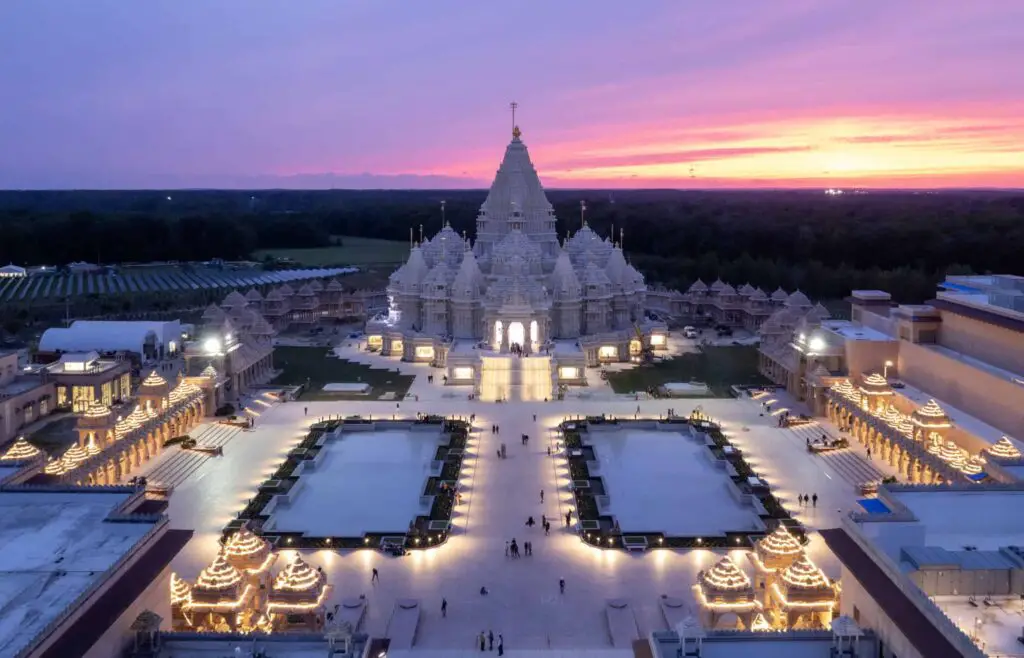
The BAPS Swaminarayan Akshardham mandir complex in Robbinsville is one of the world’s largest Hindu temple‑sites in the 21st century, covering about 74 hectares (around 183 acres) of land.
The complex includes the intricately carved stone mandir, a museum, a cultural center, and lush gardens, all built primarily by volunteers; its footprint in square meters (over 650,000 m²) places it among the top‑three largest Hindu‑rite sites globally.
Designed in the traditional Nagara‑style, it embodies the global spread of Hindu temple architecture beyond India.
2. Sri Ranganathaswamy Temple (Tiruchirappalli, India)
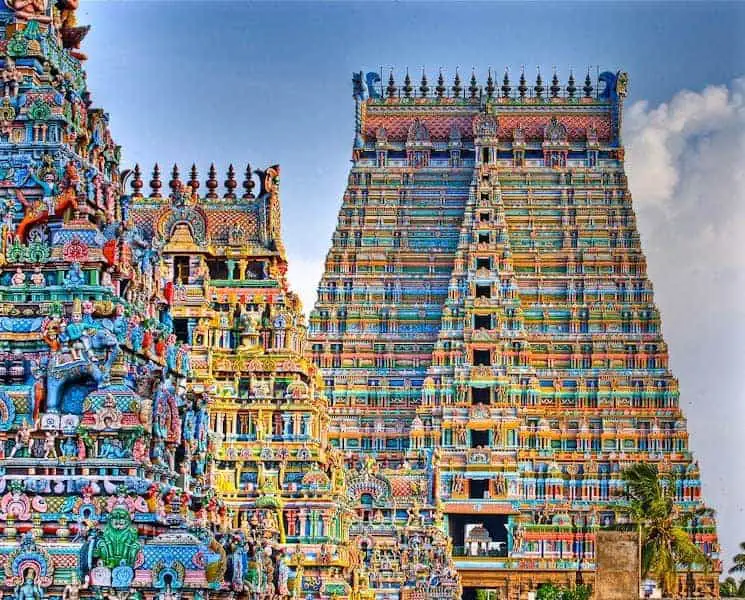
Dedicated to Lord Ranganatha (a reclining form of Vishnu), this temple on the island of Srirangam is the largest functioning Hindu temple in India and one of the world’s biggest active temple‑complexes, spanning about 63 hectares (156 acres).
Enclosed by seven concentric prakarams (enclosures) and towering gopurams, the temple houses dozens of shrines, mandapas, and a 13,500‑foot‑long outer wall, reflecting centuries of Chola, Pandya, Vijayanagara, and Maratha patronage.
Its scale and continuous worship since the Sangam era make it a spiritual and architectural epicenter of Vaishnavism.
1. Angkor Wat (Cambodia)
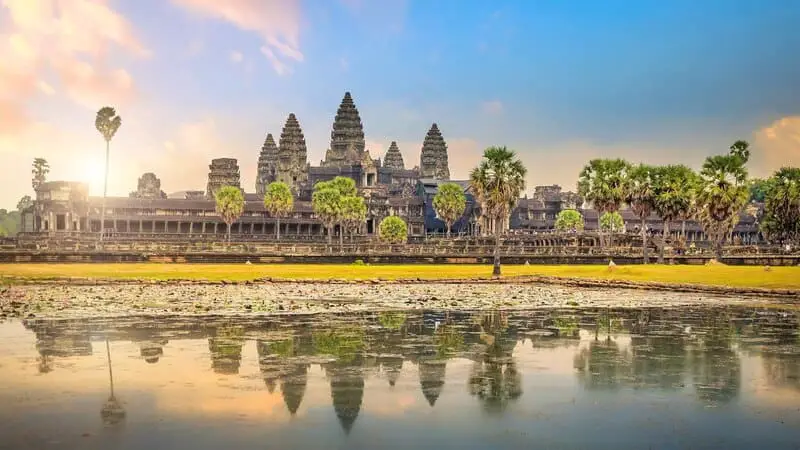
Originally built as a Vishnu‑dedicated Hindu temple in the 12th century, Angkor Wat is the largest religious building in the world, covering about 162–163 hectares (roughly 400–500 acres) at its peak.
It is also a designated UNESCO World Heritage site, recognized for its outstanding universal value.
Its vast moat‑enclosed complex, five‑towered central sanctuary, and mile‑long causeways make it both a colossal temple and a symbol of ancient Khmer engineering.
Though later repurposed for Buddhism, scholars still classify Angkor Wat as one of the greatest Hindu temple‑complexes ever built.
The largest Hindu temples reflect centuries of tradition, architectural brilliance, and deep spiritual importance. These sacred sites continue to attract millions of devotees and tourists, standing as enduring symbols of faith, culture, and monumental design.