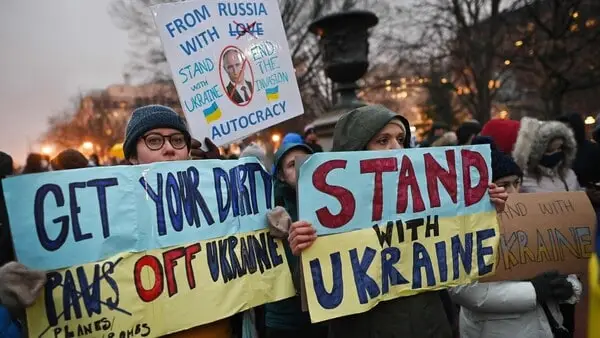
Global perceptions of nations are shaped by a complex mix of political actions, historical events, and cultural influence.
Some countries are viewed more negatively than others due to factors such as aggressive foreign policies, a history of colonialism, oppressive governments, or actions that contribute to political instability.
In many cases, these perceptions are influenced by geopolitical conflicts, allegations of terrorism support, strict laws, and controversial leadership decisions.
Such factors can significantly impact how a country is viewed on the global stage.
To identify the most hated countries in the world in 2026, it is essential to examine the underlying reasons behind these negative sentiments.
By exploring historical context, government policies, and international relations, we gain a clearer understanding of how these reputations are formed.
Below is a list of the top 10 most-hated countries in the world (2026) based on global perception and widely discussed factors.
10. Turkey
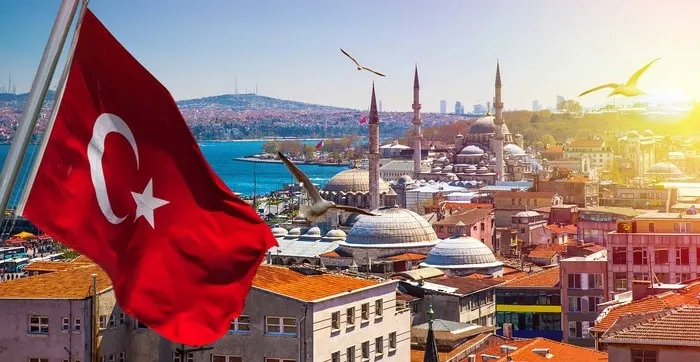
Turkey has faced accusations of supporting terrorism, which has contributed to tensions in its international reputation.
Its involvement in the Syrian conflict since 2011 has raised global concerns, particularly due to reported ties with jihadist militias opposing Bashar al-Assad and its continued support for the Syrian opposition.
Under President Recep Tayyip Erdoğan, Turkey has been a vocal supporter of Islamist groups, including the Muslim Brotherhood and Hamas.
Alongside Qatar and Iran, Turkey has been accused of providing Hamas with safe harbor and material support, straining relations with Western nations and regional neighbors such as Greece, which view these groups as security threats.
Erdoğan, who has led Turkey since 2003 (as Prime Minister and later President), has consolidated executive power following the country’s shift to an executive presidency in 2014.
His government has been accused of suppressing dissent, particularly after the failed 2016 coup.
Turkey is currently experiencing one of its most severe crackdowns on independent journalism, with multiple journalists reportedly attacked or arrested since March 2025.
Turkey has also caused friction within NATO, notably delaying Sweden’s accession until December 2024 over terrorism-related concerns.
Finland joined earlier in March 2023 after Turkish approval. Turkey designates the PKK as a terrorist organization, a classification shared by the EU, U.S., and Canada.
Historically, the predecessor Ottoman Empire is associated with the Armenian Genocide (1915–1916), during which between 664,000 and 1.2 million Armenians died.
This tragedy is one of the worst events in history, shaping Turkey’s negative perception among many nations.
9. Iraq
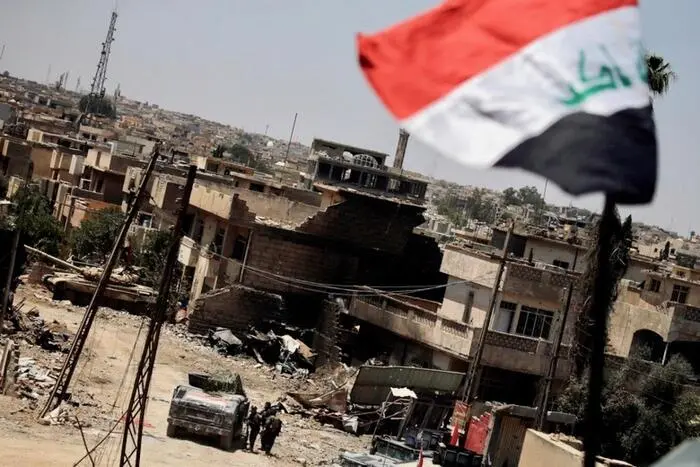
Iraq’s invasion of Kuwait marked a turning point in U.S. involvement in the Middle East, often cited as the beginning of prolonged or “endless” regional conflicts. Prior to this event, American military engagement in the region had generally been limited and short-term.
The instability associated with Saddam Hussein’s rule had lasting regional consequences.
Hussein ranks among the most evil people in history for his use of chemical weapons against Kurds and suppression of uprisings.
Decades later, parts of the Middle East continue to experience violence and political instability, with recovery timelines remaining uncertain.
In response to Iraq’s invasion, George H. W. Bush led efforts to counter Iraqi aggression. However, subsequent U.S. administrations faced ongoing challenges in stabilizing the region and reducing military involvement.
These prolonged conflicts have significantly shaped Iraq’s negative perception in international relations, linking the country to instability, war, and geopolitical tension.
8. Pakistan
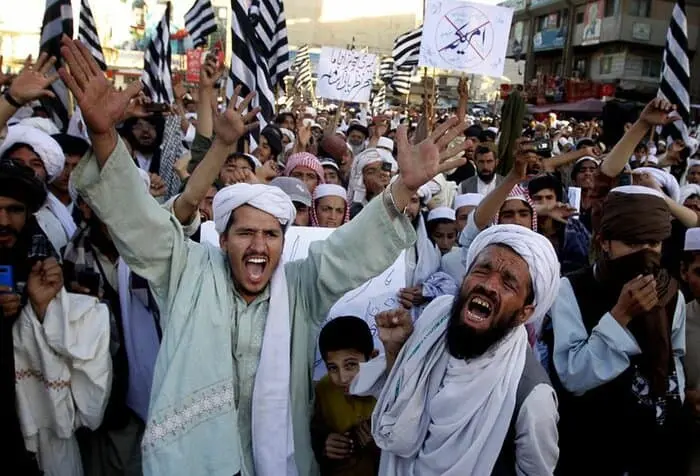
Pakistan frequently makes headlines due to its association with numerous terrorist attacks.
The country faces significant negative sentiment among many Indians due to the long-standing Kashmir dispute.
Pakistan and India have fought two full-scale wars and a limited conflict over Kashmir, with both nuclear-capable nations asserting full claims over the territory while controlling only parts of it.
Pakistan is accused of providing aid to the Taliban and harboring some of the world’s most wanted criminals (particularly India’s).
India accuses Pakistan of supporting militant groups in Kashmir, a claim Pakistan consistently refutes. Recent investigations into the April 22, 2025, Pahalgam attack, which killed 26 civilians, the deadliest assault on civilians in two decades, revealed communication nodes of terrorists in Pakistan.
Since its 1947 partition, Pakistan has been linked to supporting terrorism and operating terror camps within its borders.
However, Pakistan itself has endured massive terrorism: 2,546 fatalities occurred in 2024 alone, and 2025 is on course to become one of the deadliest years in a decade, with 2,414 fatalities in just three quarters.
Not only India, but Bangladesh-Pakistan relations were also strained due to historical grievances.
Due to political, economic, linguistic, and ethnic discrimination by the West Pakistan state, East Pakistan (now Bangladesh) experienced anti-Pakistan sentiments, culminating in the 1971 Bangladesh Liberation War. After India’s intervention, Bangladesh won independence from West Pakistan.
The blame for major attacks in Afghanistan often falls on Pakistan, further deteriorating relations.
Former Afghan intelligence chief Rahmatullah Nabil released documents alleging Pakistani intelligence provided safe houses and payments to Taliban and Haqqani network commanders in 2014-2015, though Islamabad has consistently denied sponsoring the Afghan Taliban.
Not just neighbors but Western countries also maintain strained relations with Pakistan because it has been accused of providing financial, logistical, and military support to local Islamist terrorist groups.
However, Western engagement with Pakistan remains strategically limited due to concerns about regional stability and terrorism, not purely positive appreciation.
7. Saudi Arabia
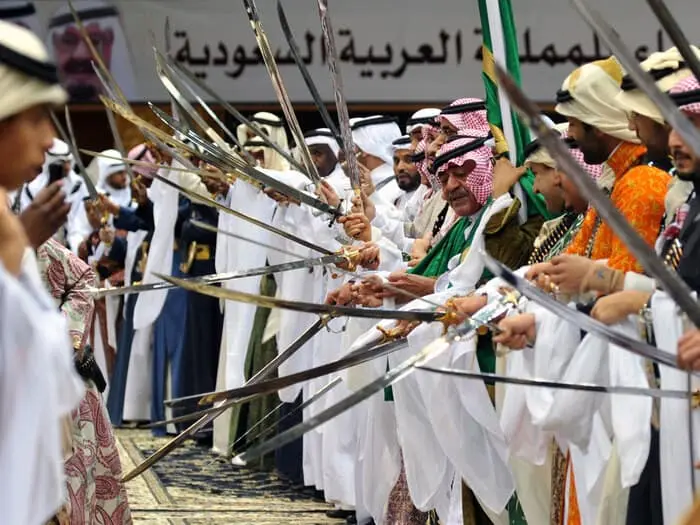
Saudi Arabia has faced accusations of funding terrorist organizations, though official investigations have found mixed evidence.
The 9/11 Commission Report found no evidence that the Saudi government as an institution or senior Saudi officials individually funded Al Qaeda, but noted that Saudi Arabia was a place where Al Qaeda raised money directly from individuals and through charities, and some charities with significant Saudi government sponsorship may have diverted funding to Al Qaeda.
Private individuals and charities from Saudi Arabia have been linked to funding for various extremist groups, which remains a concern for international counterterrorism efforts.
Fifteen of the 19 hijackers responsible for the September 11, 2001, attacks on the United States were Saudi citizens, as was Al Qaeda’s alleged mastermind, Osama bin Laden.
Numerous 9/11 families have filed federal civil lawsuits claiming Saudi Arabia’s involvement was more significant than publicly acknowledged, and a 2016 FBI report (heavily redacted) implicated Saudi officials in supporting the hijackers, though the Saudi government has consistently refuted these claims.
Some people criticize Saudi Arabia for conservative religious discourse in mosques that describes non-Muslims as infidels, though the government has attempted to moderate religious rhetoric in recent years.
6. North Korea
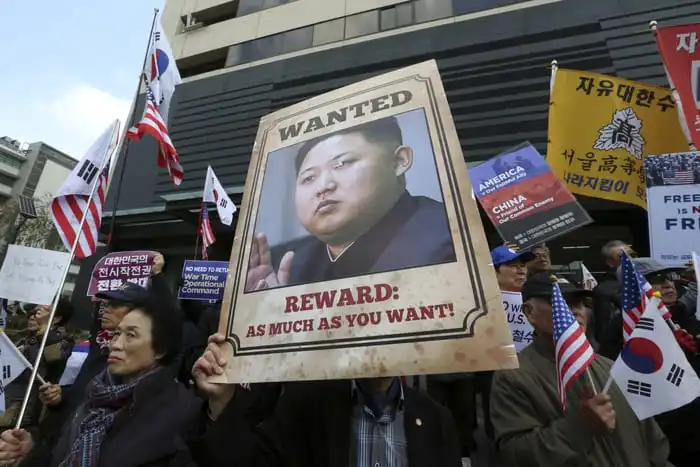
North Korea’s isolation from the rest of the world and the concentration of power in the hands of one leader have contributed to its negative perception.
The country’s provocative behavior and hostile relations with the United States since the Korean War have fueled international animosity.
Concerns about human rights violations, including curtailed freedom of expression, peaceful assembly, and association, add to the negative sentiment.
North Korea refuses to abide by international law when it comes to the treatment of its own people.
There is a shortage of food among the people; some reports even suggest that people are surviving by consuming grass and rodents.
The leadership is very much autocratic and cruel.
They are continuously developing nuclear weapons under the leadership of Kim Jong-un, a third-generation tyrant dictator.
5. Russia
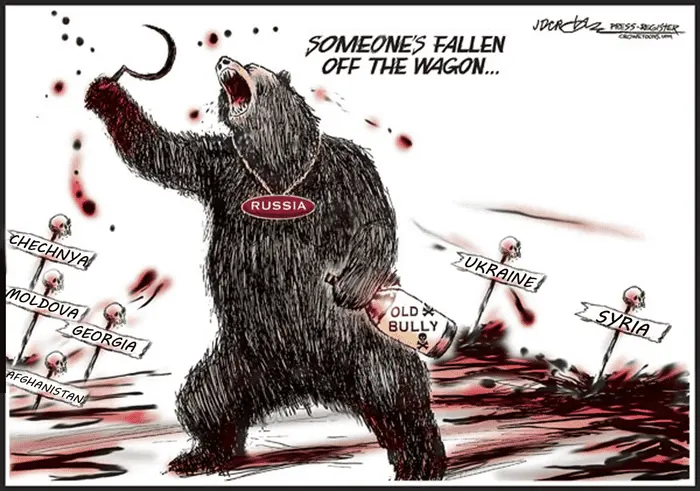
Russia’s invasion of Ukraine in 2022 has been widely condemned as a violation of international law.
The invasion has led to widespread death and destruction, and it has caused a humanitarian crisis in Ukraine.
Many countries in the Western bloc disdain Russia because of its history, racism, propaganda, or ingrained stereotypes and hatred.
Russia’s direct and indirect involvement in the violence in eastern Ukraine qualifies as state-sponsored terrorism.
U.S.-Russia relations sharply deteriorated following Russia’s development of military forces in the Crimean region at the end of February 2014.
Since then, the U.S. has never been on good terms with Russia, as they constantly try to overpower each other.
A lot of Georgians developed anti-Russian sentiment after Russia invaded Georgia in 2008.
It is important to note that not everyone hates Russia.
Many people support Russia and believe that the country is being unfairly targeted.
4. China
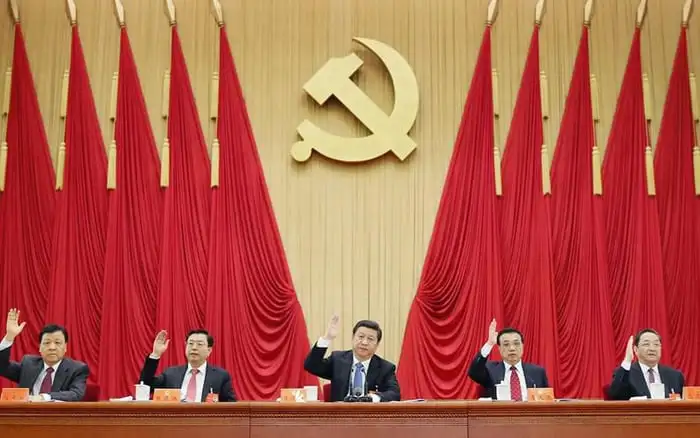
China’s handling of the coronavirus outbreak has led to a negative perception in recent years.
The government’s (CCP) negligence has been blamed for the global spread of the virus.
China’s authoritarian regime, focused on its own interests within a global context, is seen as having an agenda that may harm other nations.
Officially identified as communist China, which has zero tolerance for any broken laws or defamation of China’s character.
During the cold war, anti-Chinese sentiment became permanent in the media of the Western world and anti-communist countries, mainly after establishing the People’s Republic of China in 1949.
To this day, South Koreans believe that China led to the division of Korea into two countries.
Even in the soviet union, the anti-Chinese sentiment was high due to the differences, resulting in a war between the two countries.
China has the highest execution rate.
Its production of counterfeit and dangerous products, and rapid economic growth, which can be perceived as a threat, further contribute to its negative image among developed and powerful countries.
China’s rapid economic growth also seems like a threat to most developed and powerful countries.
3. United States
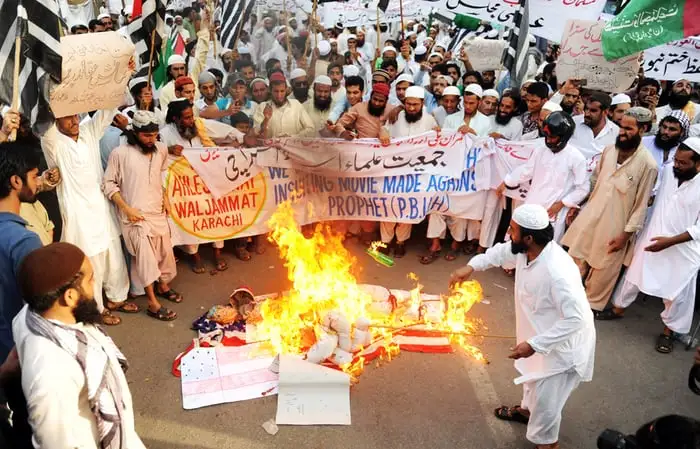
In all seriousness, the United States is despised because it is a powerful, wealthy, influential country, and it is impossible to have such authority worldwide and not be hated.
Most Americans are seldom confronted with the stark reality of US military superiority.
The term “global policeman” refers to a superpower that aspires to or claims the right to meddle in the affairs of other sovereign states.
It was initially employed by the United Kingdom and, after 1945, by the United States.
The role of the United States as a “global policeman” has been controversial.
Some people believe that the United States has a responsibility to use its power to promote peace and stability around the world.
Others believe that the United States should not intervene in the affairs of other countries and that this role has led to the United States becoming involved in unnecessary wars.
2. Israel
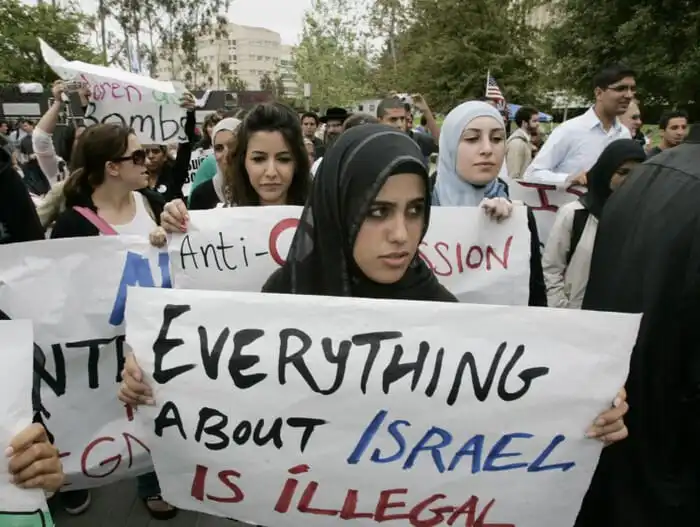
Israel is frequently involved in conflicts stemming from the complex Israeli-Palestinian dispute, which centers on competing claims to land, borders, security concerns, and the right to self-determination.
The conflict has involved multiple wars since 1948, including the 1948 Arab-Israeli War, the 1967 Six-Day War, and the ongoing crisis that escalated dramatically after Hamas’s October 7, 2023, attack on Israel, which killed approximately 1,200 people and took roughly 250 Israeli hostages.
Human rights organizations, including the UN and Amnesty International, have documented serious concerns regarding Israeli restrictions on Palestinians in the occupied territories, including movement restrictions, settlement expansion, and military operations.
At the same time, international bodies have also documented human rights violations by Palestinian armed groups, including Hamas.
The UN noted concerns regarding extrajudicial killings by Hamas and continued civilian fatalities caused by Israeli military operations, with both sides required to adhere to international human rights standards.
Some people have made controversial comparisons between Israel and Nazi Germany, but these comparisons are widely rejected by scholars and human rights organizations.
Muslim attitudes toward Israel vary significantly.
After Iran’s supreme leader’s death, Israeli Prime Minister Benjamin Netanyahu consistently receives highly unfavorable ratings in international polls, often ranking among the most disliked global figures.
But Egypt (1979), Jordan (1994), the UAE, Bahrain, Morocco, and Sudan (2020 Abraham Accords) have normalized relations with Israel.
Since October 7, 2023, the crisis has caused large numbers of civilian deaths and injuries on both sides. About 50 hostages remain in Gaza, and attacks on health workers and facilities have been reported in both Israel and the Palestinian territories.
1. Iran
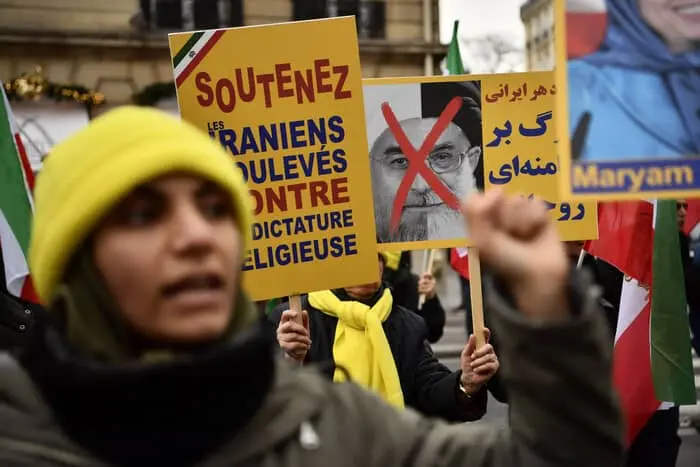
Iran is known for its increasingly adversarial stance toward Western powers, particularly the United States and Israel.
This foreign policy has evolved through growing anti-Westernism, militarization, and authoritarianism in recent years, with power increasingly centralized in revolutionary institutions.
Iran has been accused of supporting militant groups across the region (Hezbollah, Hamas, Shia militias in Iraq, Houthi rebels in Yemen) to achieve its geopolitical goals.
As of March 2025, Iran possessed approximately 275 kg of uranium enriched to 60% purity (potentially enough for ~6 nuclear weapons if further enriched to 90%).
U.S. officials estimate developing a nuclear weapon could take 1-1.5 years if Tehran decides to pursue it, though some analysts suggest a rudimentary device could be built in 6 months.
In June 2025, Israel and the U.S. conducted airstrikes on Iran’s nuclear facilities at Natanz, Fordow, and Isfahan; the IAEA confirmed the Pilot Fuel Enrichment facility at Natanz was destroyed, with larger facilities likely damaged.
The ongoing Iran-Saudi Arabia rivalry (triggered by the 1979 Revolution) has contributed to Iran’s negative image as Shia-majority Iran and Sunni-majority Saudi Arabia competed for regional dominance through proxy conflicts.
Iran has a strong military, a large population (~85 million), and significant regional influence. Its actions significantly impact Middle Eastern stability.
The country maintains the world’s worst human rights record in recent years: over 2,000 executions in 2025 (highest since late 1980s), mass arbitrary arrests, torture, flogging, amputations, systematic repression of women (compulsory hijab), and persecution of ethnic/religious minorities (especially Baha’is).
Global resentment toward Iran has skyrocketed in 2026 from its direct role in escalating a devastating Middle Eastern war, destabilizing complete middle east.
Currently, in 2026, these top 10 most hated countries in the world have garnered their negative reputations through a range of factors.
Historical events, political actions, and cultural dynamics have all played a role in shaping international perceptions.
From accusations of terrorism support and human rights concerns to geopolitical struggles and handling of global crises, these countries have faced significant challenges in altering their image.
By understanding the complexities behind these sentiments, we can gain valuable insights into the global dynamics that shape our perceptions of nations worldwide.
Just as I expected
Love USA from lebanon no matter what they do I will always support them 🇱🇧❤️🇺🇸