The world’s widest trees are natural giants known for massive trunk girth, ancient age, and ecological significance.
From sprawling banyan trees to towering sequoias, this list of the top 10 stoutest trees in the world highlights record-breaking trunk diameters, canopy spread, and unique growth patterns across global forests.
10. Cheewhat Lake Giant – Western redcedar (Canada)
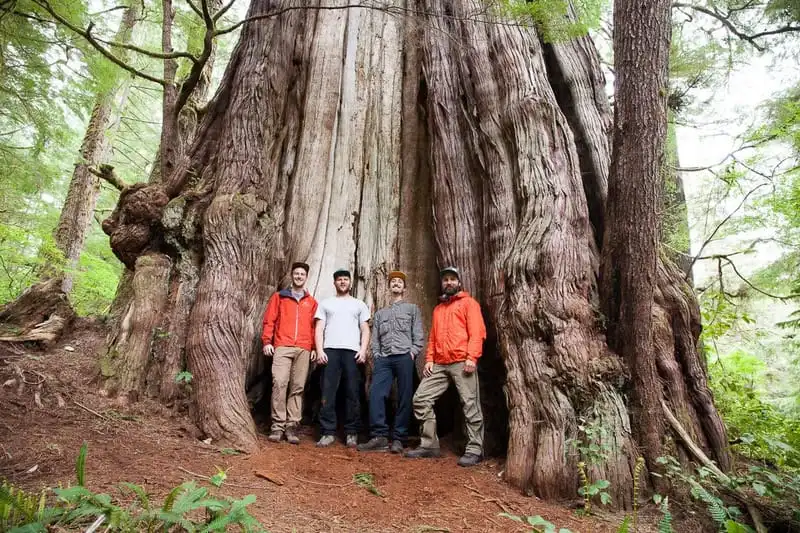
The Cheewhat Lake redcedar in British Columbia is the widest‑trunked Sitka spruce or western redcedar in Canada, often listed among the top‑diameter trees in the country.
Its trunk diameter is about 6 m (nearly 20 ft), implying a circumference over 18 m and a ground‑level “width” of roughly 6 m.
This individual grows in a temperate rainforest and exemplifies how coastal conifers can thicken dramatically over decades of growth in cool, wet conditions.
9. Linn Birch / Giant linden at Linn (Switzerland)
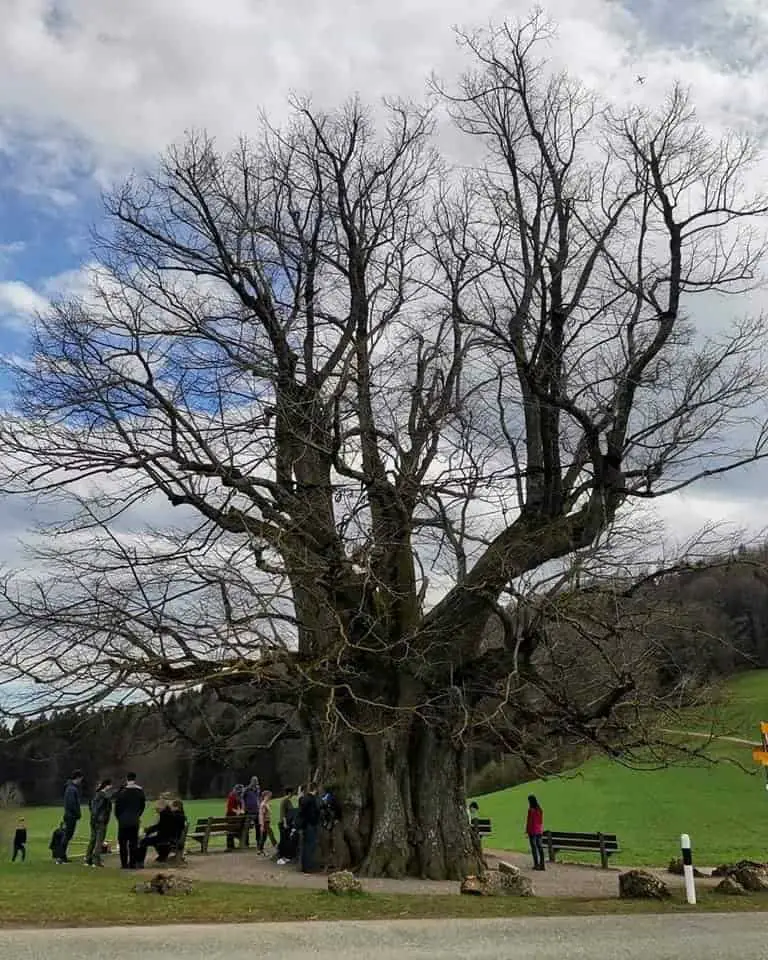
The Linner Linde (a large‑leaved linden, Tilia platyphyllos) in Linn, Switzerland, is often cited as one of the widest‑trunked broadleaf trees in Central Europe.
Its circumference is reported to be around 10–11 m, yielding a trunk width of about 3.2–3.5 m, and it is estimated to be roughly 800 years old.
The tree’s enormous, fluted trunk and gnarled limbs make it a local landmark and a surviving relic from medieval times.
8. Major Oak – English oak (England)
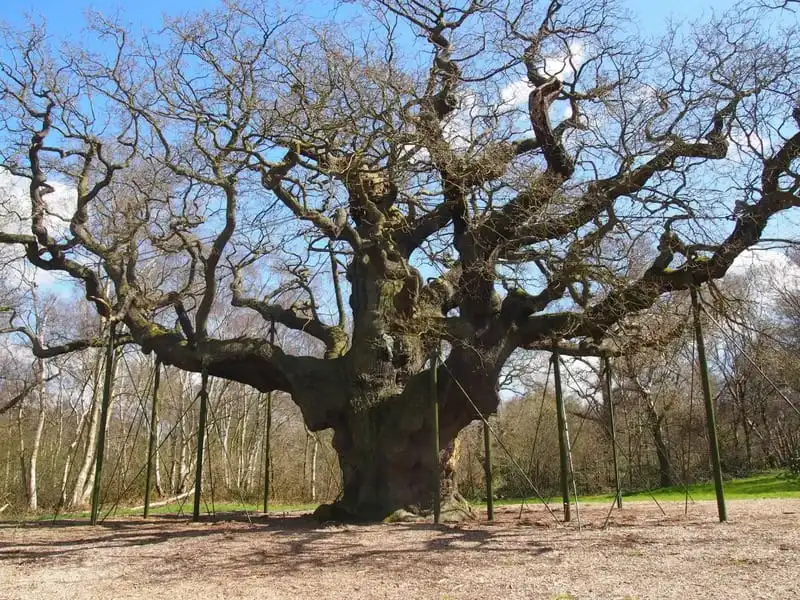
The Major Oak in Sherwood Forest, England, is not the tallest or most voluminous tree, but its trunk girth ranks among the widest oaks in Europe.
At about 800 years old, it has a circumference of about 10.5 m (about 34 ft), giving it a trunk “width” of roughly 3.3–3.5 m.
Festooned with props and supports, this pedunculate oak (Quercus robur) is a legendary symbol of the Robin Hood tales and one of Britain’s most visited individual trees.
7. Atwell Tunnel Giant – Giant sequoia (USA)
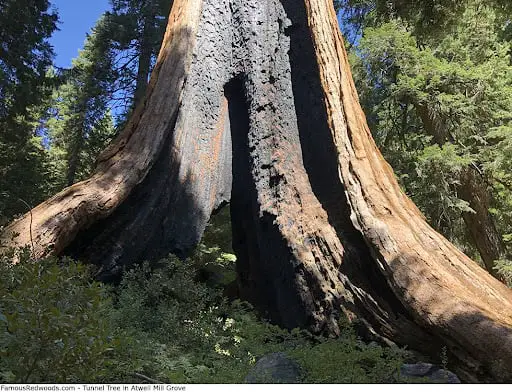
Among the largest known giant sequoias by trunk volume, the Atwell Tunnel Tree (also called the “Tunnel Tree”) has one of the most massive lower trunks.
Its ground‑level circumference is about 34 m (111 ft), implying a diameter of roughly 11 m and a trunk “width” of that order.
This tree is famous both for its size and for the short tunnel once carved through its base, a controversial feature that has since become a symbol of the conflict between tourism and forest conservation.
6. Hyperion – Coast redwood (USA)
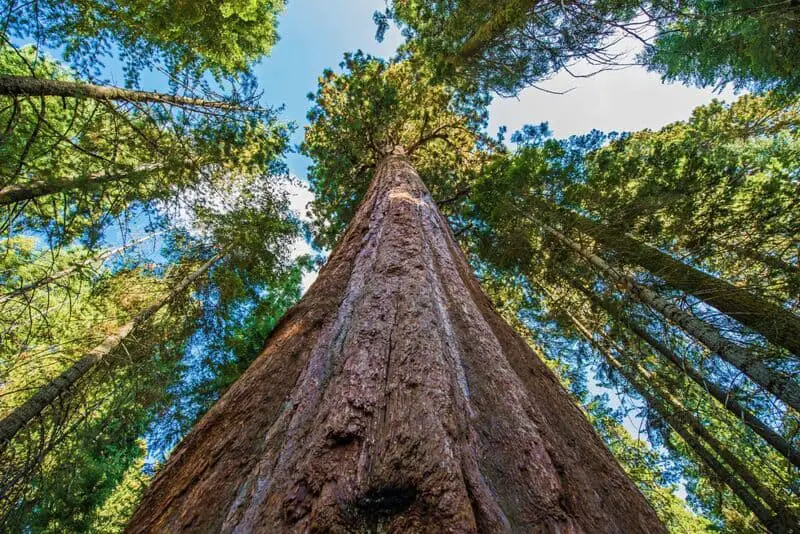
Hyperion, a coast redwood (Sequoia sempervirens) in Redwood National Park, is the tallest known living tree, but its trunk is also exceptionally wide.
At breast height, its diameter is around 4.8 m (about 16 ft), corresponding to a circumference of roughly 15 m, giving it a trunk “width” of nearly 5 m.
Standing over 115 m tall, Hyperion’s sheer height plus stout trunk make it one of the most volumetrically massive trees, even though it is not the widest in absolute girth.
5. General Sherman – Giant sequoia (USA)
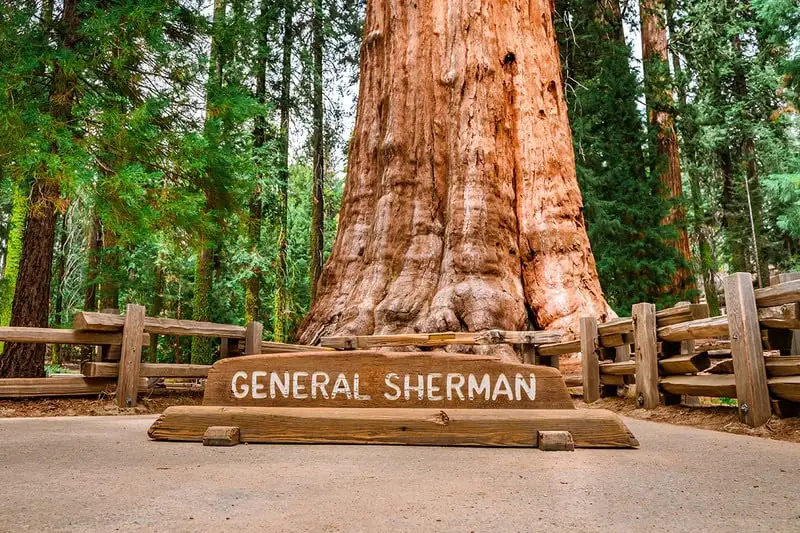
Though not the widest‑trunked tree, the General Sherman sequoia in California’s Sequoia National Park is the largest tree by volume and has one of the thickest single‑stem trunks. It is the biggest tree in the world by overall mass.
Its trunk has a circumference near 31 m (about 102 ft) at ground level, translating to a diameter of roughly 10 m, giving it a “width” comparable to a small house.
Around 2,200 years old, General Sherman stands about 84 m tall and is the poster child for the immense size extreme‑aged conifers can achieve in ideal Sierra Nevada conditions.
4. Sagole Baobab – Baobab (South Africa)
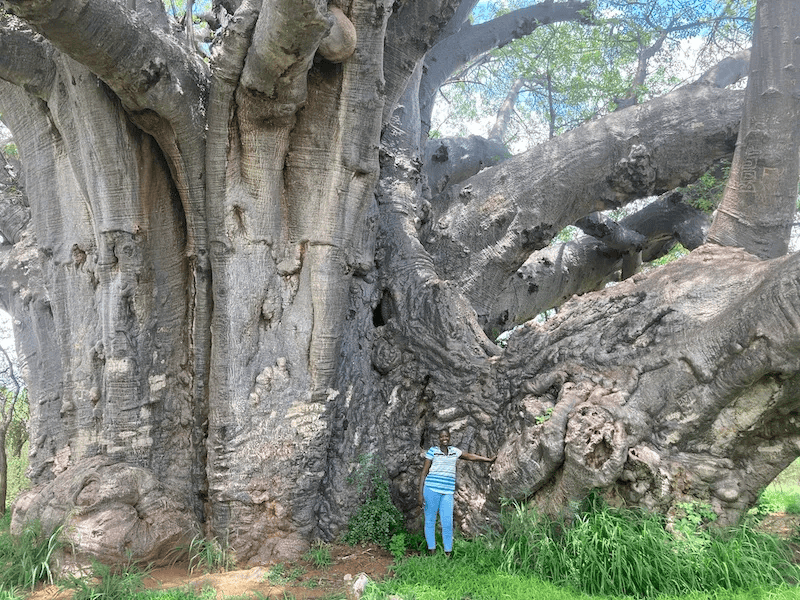
The Sagole Baobab, also known as the Sagole Big Tree, is the largest baobab in South Africa by volume and one of the widest‑trunked trees on the continent.
It has a trunk circumference of about 32–33 m (around 108 ft) and a diameter of about 10.8 m, giving it a ground‑level “width” of roughly 11 m.
Rising to about 19.8 m high, this Adansonia digitata has a basal area of more than 60 m² and a wood‑and‑bark volume exceeding 400 m³, making it a true botanical giant.
3. Glencoe Baobab – Baobab (South Africa)
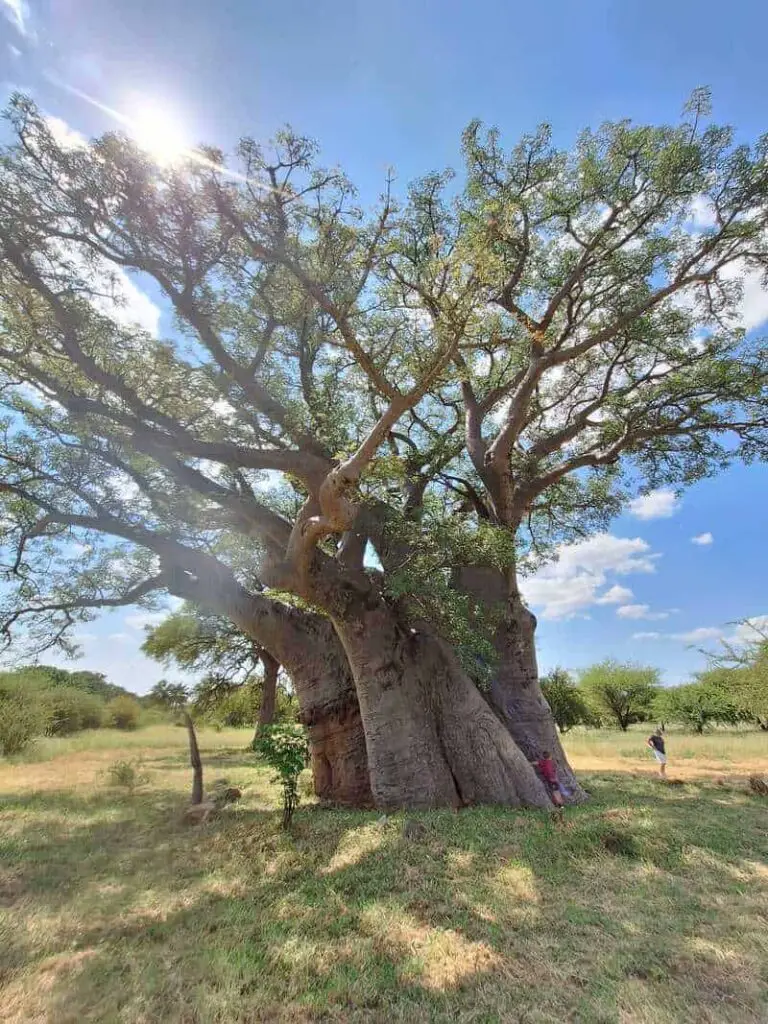
The Glencoe Baobab (Adansonia digitata) in Limpopo, South Africa, is often described as the stoutest baobab and one of the stoutest trees on the planet.
Before a major split, its trunk diameter was about 15.9 m (52 ft), corresponding to a circumference of roughly 47–50 m, implying a trunk “width” approaching that full diameter.
Its massive, bottle‑shaped trunk stores vast quantities of water, allowing the tree to survive long droughts; the specimen is several hundred years old and is now revered as a “Champion Tree” in South Africa.
2. The Tree of One Hundred Horses – European chestnut (Italy)
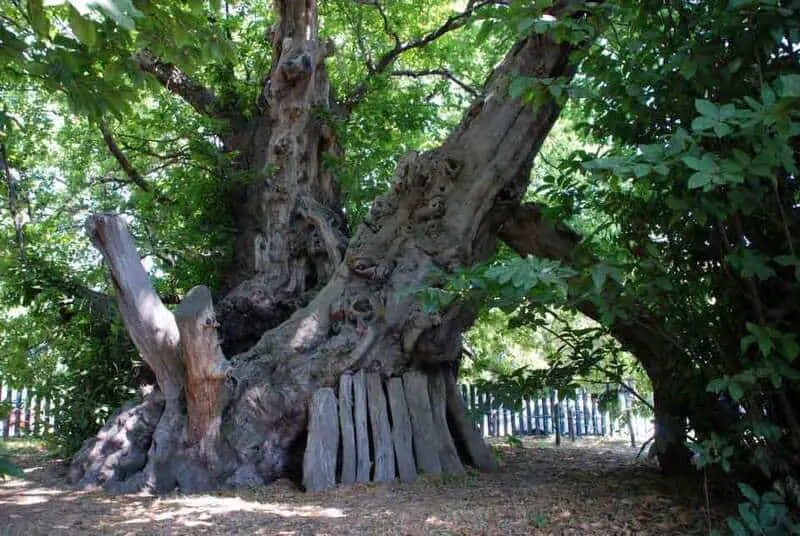
On Mount Etna in Sicily, the “Castagno dei Cento Cavalli” (Tree of One Hundred Horses) once held the record for the largest tree girth ever recorded, with a circumference of about 57.9 m (190 ft) in the late 18th century.
Over time, the massive trunk split into three separate sections, but even the largest surviving stem still measures more than 20 m in circumference, giving it an effective trunk width well over 6 m.
Named for a medieval legend in which 100 knights supposedly sheltered under its canopy during a storm, this European chestnut (Castanea sativa) is one of the oldest documented trees in Europe, possibly more than 2,000 years old.
This makes it a contender for the oldest tree in the world among broadleaf species.
1. El Árbol del Tule – Montezuma cypress (Mexico)
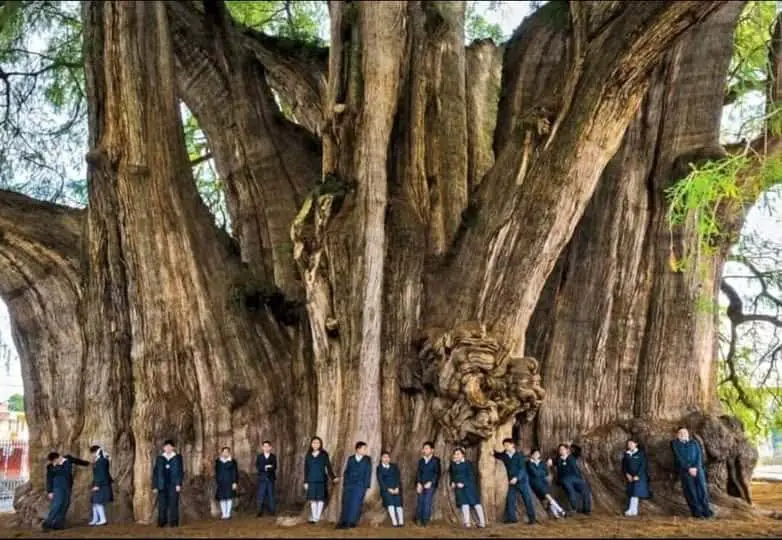
Located in Santa María del Tule, Oaxaca, Mexico, this Montezuma cypress (Taxodium mucronatum) is widely regarded as the living tree with the widest trunk circumference.
Its girth is commonly cited around 36–42 m (119–138 ft), yielding a trunk “width” of roughly 11.5–14 m when roughly converted from circumference, making it the widest‑trunked single‑stem tree on Earth.
The tree is estimated to be 1,400–2,000 years old, a sacred symbol for local Zapotec communities and a candidate for UNESCO World Heritage status.
Its majestic form ranks it among the most beautiful tree in the world.
The widest trees in the world showcase extraordinary growth, resilience, and biodiversity value.
These natural wonders, including banyans and giant sequoias, play a critical role in ecosystems while standing as living records of Earth’s environmental history.
While these giants are harmless to humans, some species are dangerous (see the deadliest tree in the world for a stark contrast).