
The global technological landscape has evolved dramatically since the aftermath of World War II, when many nations struggled to rebuild their economies and infrastructure.
However, from the late 20th century (particularly during the Cold War), rapid advancements in science, engineering, and computing began to reshape modern society.
The intense competition between these top economies, combined with successive industrial revolutions, accelerated innovation in areas such as space exploration, information technology, telecommunications, and defense systems.
These developments played a crucial role in shaping the modern digital world we live in today.
Today, technological advancement is driven by factors such as research and development (R&D), artificial intelligence, manufacturing capabilities, infrastructure, and innovation ecosystems.
Several countries have emerged as global leaders by consistently investing in these areas and pushing the boundaries of science and technology.
Today, we explore the top 10 most technologically advanced countries in the world in 2026, analyzing the nations that are leading innovation, driving digital transformation, and shaping the future of technology:
10. China
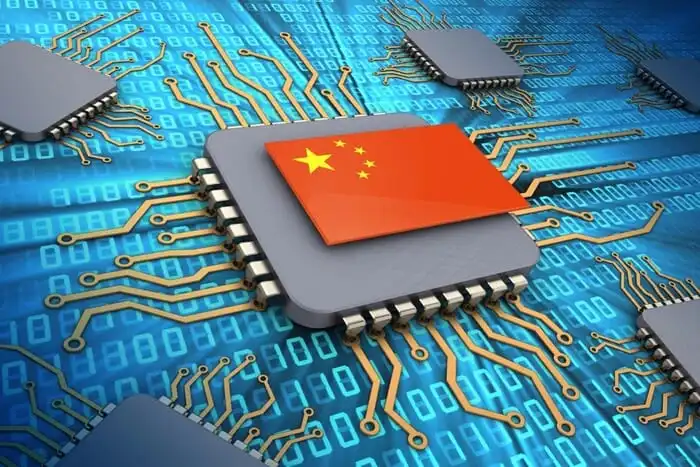
China has made rapid and broad technological progress in recent decades, becoming a major player across many fields of science, engineering, and industrial application.
Analysts and policy institutes argue that China’s advances are an important factor in current geopolitical and economic competition, especially where those advances affect supply chains, dual-use technologies, and national security-relevant capabilities.
Major areas of noticeable progress include digital infrastructure, high‑tech manufacturing, renewable-energy equipment, applied AI, and increases in scientific publications, patents, and commercial deployment of new technologies.
Beijing has announced targets and policies to raise domestic self‑reliance in key components and materials for advanced manufacturing, and some official targets have aimed for large increases in domestic content by the mid‑2020s, though exact figures and timelines have varied by sector and document.
Observers caution that, despite substantial gains and leadership in research output in many technologies, China still trails in several high‑end areas, notably the most advanced semiconductor manufacturing equipment, leading‑edge chip production, and some frontier capabilities where the United States and allied firms retain strengths.
At the same time, China’s mature capabilities in machinery, construction, logistics, and renewable-energy hardware have made many technologies that developing countries need more accessible, helping to raise economic and social capacity abroad.
As Chinese firms scale up and high‑volume production expands, some technologies that are currently considered cutting‑edge may become commoditized more quickly, which makes innovation adoption and output (not only R&D input) an important strategic priority for competitors and partners.
Analysts conclude that maintaining long‑term competitiveness will require governments and companies to focus on translating research into large‑scale, widely adopted products and systems while addressing supply‑chain security for critical components.
9. Finland

According to available sources, Finland’s technological trajectory in 2026 reflects a mix of strengthening innovation ecosystems and continued policy‑driven investment, even if the year‑specific “breakthroughs” are not always explicitly itemized.
One Finnish telecom‑driven report, for example, highlights 17 emerging technology trends expected to gain prominence in 2026, including digital‑experience upgrades, cybersecurity acceleration, and sustainable‑technology integration, which together frame the broader direction of Finland’s tech sector rather than list separate national “advancements”.
Helsinki, in particular, is tracked as a globally visible science and technology cluster, filing thousands of international patents and publishing tens of thousands of scientific articles per million inhabitants, with Nokia, Ericsson, and Kone among the top patent‑applying firms, and universities such as the University of Helsinki and Aalto University as leading research institutions.
8. Germany
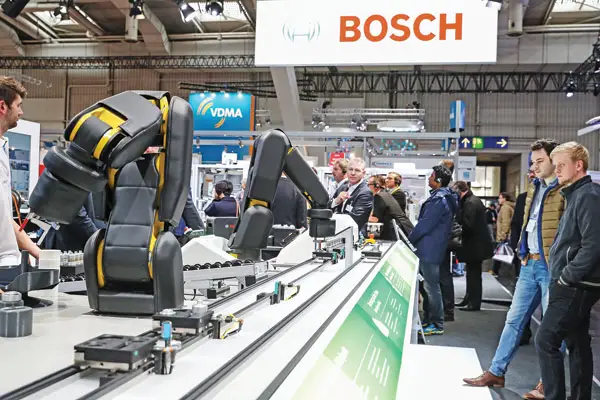
It’s no surprise that Germany is on this list. You may know that their efforts in research and development have contributed to nanotechnology and space travel.
Germans are medical, engineering, infrastructure, and military technology.
The government supports the preparation of new generations of scientists by several universities and institutions.
German researchers have been involved in fields such as space travel and nanotechnology.
The industry, from early times, has supported scientific research in the country.
The Gottfried Wilhelm Leibniz Scientific Community, the Fraunhofer Society, and the Max Planck Society are home to many research organizations in Germany.
The German economy is an integral part of research and development efforts.
Global automotive brands like BMW, Volkswagen, Mercedes, etc positively contribute towards their technological edge.
7. Sweden

Sweden’s technological development achievements in web development and mobile apps are unprecedented.
Sweden was among the few technological countries that survived the financial crisis of 2008 and achieved economic growth, mainly because of the success of technology firms.
Big tech corporations like Ericsson, who dominated the market for years, are now losing the first position to other Swedish firms like Spotify, Skype, and Torrent.
These high-tech companies use Internet flexibility to increase communication and develop opportunities to exchange information, ideas, and music.
6. Israel

Israel’s private sector has become a major global hub for innovation, particularly in high‑tech, defense, and agriculture, even though the country is relatively small in size.
Israel is widely recognized as a leader in defense technology, producing advanced weapon systems and unmanned platforms used by militaries around the world, not merely “the world’s most advanced weapons” in a blanket sense.
In agriculture, Israel has developed highly efficient solutions such as drip irrigation, precision‑farming tools, and water‑recycling systems that can roughly double yields per unit of water and labor compared with conventional methods, rather than simply “half the effort” in a vague way.
About a third of Israel’s exports are now linked to technology‑intensive sectors, reflecting the outsized role of high‑tech in the economy.
Israel is also among the leading countries in “space‑related sciences and innovation” in terms of per‑capita achievement and niche capabilities, though it is not typically ranked in the absolute top five overall space‑powers alongside the U.S., Russia, China, and Europe.
On defense, Israel pioneered early Unmanned Air Vehicles (UAVs) with real‑time surveillance, digital espionage and has since become a global exporter of advanced aerial‑reconnaissance and loitering‑munition systems.
In electric‑vehicle infrastructure, Israel has been expanding its network of public charging stations, with government plans to reach several thousand charging points by 2030, but the current network is still developing and cannot yet be described as one of the world’s most mature, fully modern EV infrastructures.
5. Switzerland

The World Intellectual Property Organization index (WIPO) states that Switzerland is the leading innovation country in the world. Science and technology have always been the focus of Switzerland’s economy and have been strongly promoted by the government and the private sector, as Switzerland lacks all industrial natural resources.
Research-intensive universities, research institutions, and private companies mainly conduct research.
In the category of ‘knowledge and technology outputs,’ Switzerland consistently has ranked particularly high.
Switzerland has the highest per-capita patent applications in Europe (third in the world) as published by the European Patent Office (EPO).
Swiss innovators filed over 1,000 patent applications per million people, while runner-up Dutch people (Netherlands) has 416 patent applications per million.
4. Singapore

Many major global companies continue to open or expand offices in Singapore, drawn by its strong digital infrastructure, business‑friendly regulations, and role as a regional hub for finance, logistics, and high‑tech innovation.
Singapore has firmly established itself as the leading technology and innovation center in Southeast Asia, hosting a dense cluster of startups, research institutes, and multinational R&D centers.
The country’s science and technology ecosystem is growing rapidly, with venture‑capital funding flowing into AI, cybersecurity, fintech, and deep‑tech startups; in early 2026 alone, Singapore‑based startups raised well over a hundred million dollars in venture funding.
Singapore also ranks among the world’s fastest for fixed‑broadband internet speeds, maintaining a top‑tier position in global speed tests even as mobile speeds lag slightly behind the very top countries.
This “corridor of technology” thrives on close collaboration among scientists, entrepreneurs, and government agencies, with agencies such as Enterprise Singapore and the Infocomm Media Development Authority actively co‑funding and scaling AI‑driven projects and innovation grants.
Singapore’s 2026 budget has added over a billion dollars in stacked support for deep‑tech and growth‑stage startups, new AI‑focused programs, and expanded tax and grant incentives, signaling an intensified push to make the country a global test‑bed and scaling hub for next‑generation technologies.
3. Japan
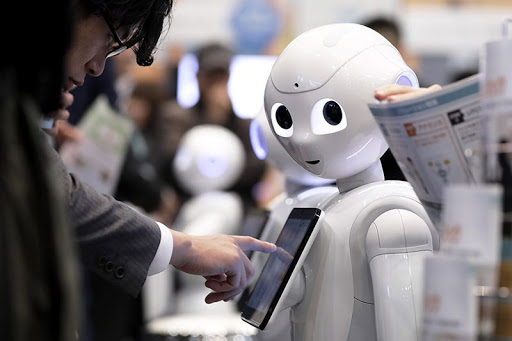
The reputation of Japan as a country with advanced technologies has been well established.
Researchers from Japan have made huge contributions in the field of automotive tech, electronics, machinery, earthquake engineering, optics, industrial robotics, metallurgy, and semiconductors.
RocketSpace terms Japanese cities like Osaka, Fukuoka, and Tokyo as some of the most technologically advanced cities.
Since 1973, the nation has successfully sought to be less dependent on imported fuel.
We have also begun associating Japan as the most technologically advanced country with bullet trains, smart toilets, and robotic technology.
But this Asian country can never stop making our lives much easier (and more fun).
Among Japan’s technological giants are Sony, Toshiba, Mitsubishi, Panasonic, and many more.
2. United States of America

In 2026, the United States remains a leading innovation powerhouse but faces stronger competition from China, the EU, and other advanced economies, creating a more multipolar technology landscape.
Its strengths lie in frontier research, AI, advanced semiconductors, life sciences, and large-scale commercialization.
The U.S. dominates core technologies such as AI research, compute infrastructure, and advanced chips. It hosts many of the world’s largest data centers and produces a significant share of high-impact research and patents, supported by strong IP protection and a robust innovation ecosystem. U.S. companies also lead globally in valuable tech and platform businesses.
Other economies are closing the gap. China leads in areas like EVs, solar manufacturing, and 5G deployment, though it lags in cutting-edge chips.
The EU excels in advanced manufacturing and green tech, while countries like South Korea, Israel, and Singapore lead in specialized sectors. Innovation remains concentrated among a few major economies, with the U.S. still near the top.
U.S. strategy focuses on R&D investment, export controls, and global tech alliances. However, it must improve large-scale deployment in areas like clean energy and AI to maintain its edge.
The U.S. remains a top innovation leader, but its dominance is now more contested and requires continuous adaptation.
1. South Korea

In 2026, South Korea remains one of the world’s most technologically advanced economies, positioned just behind leaders like the United States and China.
It has evolved from a fast follower into a global leader in semiconductors, displays, consumer electronics, and advanced manufacturing.
Major firms such as Samsung Electronics and SK Hynix dominate global memory chip markets, giving Korea strong influence in AI and high-performance computing supply chains.
South Korea excels in high-tech hardware and industrial digitalization. It leads in DRAM, NAND flash, OLED displays, and imaging sensors: core technologies behind smartphones, AI systems, and modern vehicles.
Additionally, South Korea is one of the most digitally advanced societies, with near-universal internet access, fast mobile networks, and widespread adoption of e-government and fintech services, making it a key testbed for smart cities and digital infrastructure.
Although smaller in total R&D spending than larger economies, South Korea performs exceptionally well in patents, high-tech exports, and industrial application.
Its innovation ecosystem is driven by large conglomerates (chaebols) and strong government support, enabling rapid scaling but also creating reliance on a few major players.
Why China is not on this list?
why you left china